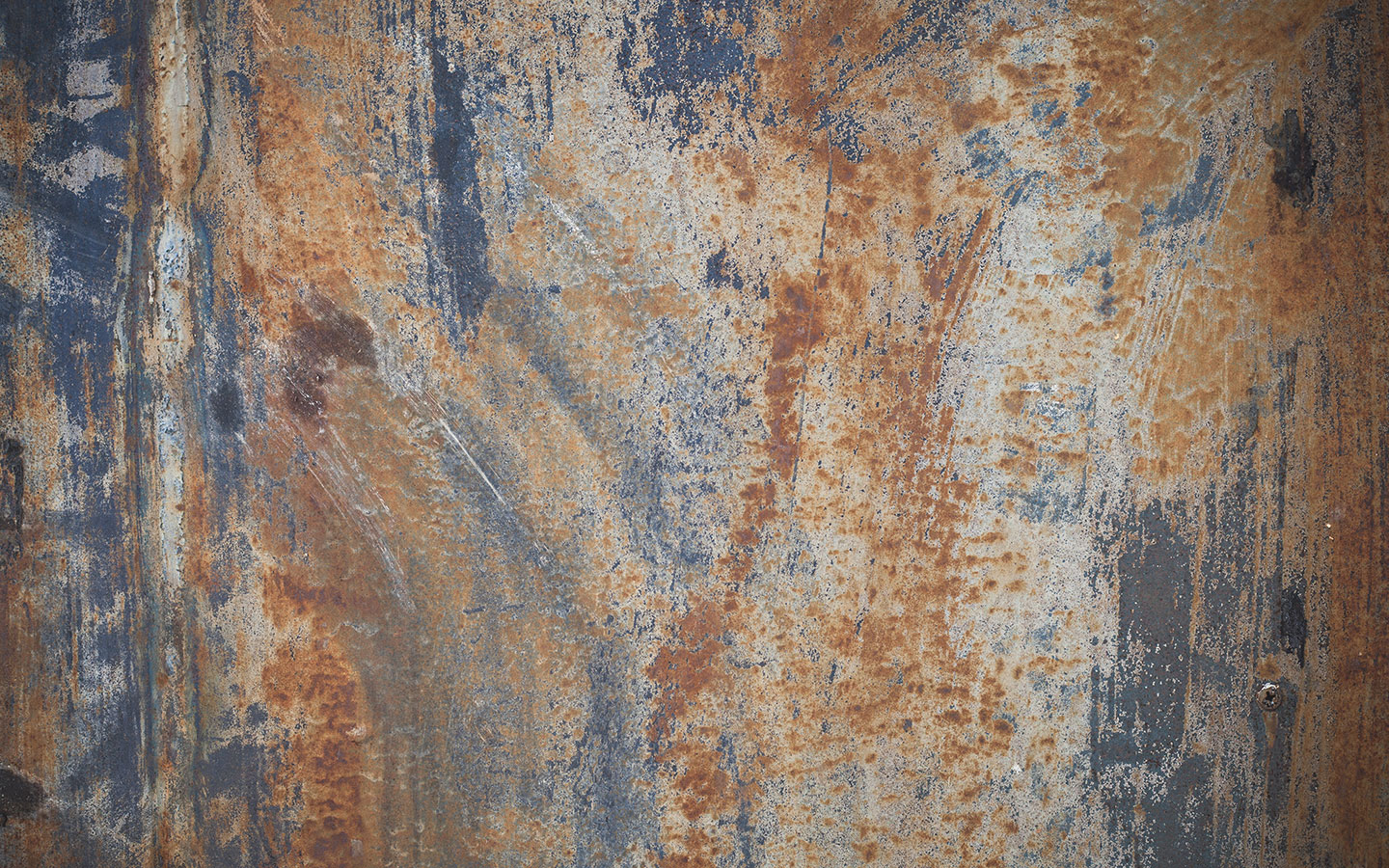
Corrosion. Corrosion protection coatings.
Corrosion is the interaction of a metallic material with its environment, which causes a measurable change in this material and leads to a deterioration in its functioning. Statistics show that annually about 2-3% of the total amount of metals in various products and equipment (machinery and apparatus, vehicles, structures, equipment, etc.) are destroyed by corrosion. Corrosion processes occur when a metal comes into contact with gases, liquids or liquid metals, during which purely chemical or electrochemical reactions take place.
Economic consequences
Global corrosion costs are estimated at $ 2.5 trillion, or 3.4% of world GDP (gross domestic product). Using existing corrosion control practices, it is estimated that savings of between 15 and 35% of corrosion costs can be realized; i.e. between $ 375 and $ 875 billion a year on a global basis. In order to save this amount, it is necessary to implement a corrosion management system (CMS).
Types of corrosion
Depending on the mechanism of metal damage, there are different types of corrosion. Some of the most common are:
-Chemical corrosion
The cause of chemical corrosion is the chemical interaction between the metal and the working environment. It is typical for cases where the working medium is not an electrolyte, such as superheated steam.
-Electrochemical corrosion
The course of electrochemical corrosion is caused by the formation of corrosive elements at the metal-working interface. This type of corrosion is characteristic of cases where the working fluid is an electrolyte.
-Corrosion-erosion
Erosion corrosion is a process of destruction of the metal as a result of the frictional influence of the environment. It is typical for technological processes in which there are high speeds and turbulence of the working fluid - two classic examples are the wear of the walls of technological pipelines at the points immediately after control valves, as well as the destruction of steam turbine blades under the influence of wet steam.
-Biological
Biological corrosion is a process of destruction of the metal under the influence of certain bacteria, e.g. sulfate-reducing bacteria. At facilities located near sea shores, overgrowth with various algae and contact with sea water was observed, which formed corrosive elements on the metal surfaces.
-Piting corrosion
Pitting corrosion is concentrated in small areas of the metal surface and concentrated in depth. After removing the corrosion products, ulcers, spots or stains remain on the affected surface.
Corrosion prevention is a major task for many engineers and technicians working in construction and mechanical engineering.
Important for the corrosion resistance of the material are:
-the purity of metals;
-the type of metal surface - the smooth surface corrodes more difficult;
-temperature - the higher it is, the faster the metal will corrode;
Corrosion protection is a set of measures to prevent corrosion on metal surfaces and structures. The main task of this protection is to protect metal surfaces from the external environment, which have a chemical corrosive effect or to slow down this effect by protective coatings or barriers. The type of protection used is directly dependent on the chemical properties of the metals and the different degrees of protection. The choice of coatings for protection must carefully take into account the specific environmental conditions and the specifics of production, chemical pollution and climate. Equipment that is expected to operate regularly in a corrosive environment is designed to require minimal additional corrosion protection or is dimensioned so that corrosion does not cause significant changes in their mechanical properties.
The preparation of the metal surface depends on the degree of contamination and the equipment available to the contractor. Proper cleaning of the substrate largely determines the life of the protective system that will be applied.
Removal of contaminants from the surface (salts, oil, oils, rust, soot, paint, etc.) is done by degreasing, manual and mechanized cleaning, blasting or hydroblasting. The most commonly used degreasing method is by washing with solvents, followed by wiping with clean rags. Wiping is very important, because if not done properly, the result of washing with solvents will spread the contamination over a wider area. Chlorinated hydrocarbons, extraction gasoline, acetone or other organic solvents are recommended as degreasers.
By hand brushing, sanding, scraping or chipping, slightly glued deposits, rust and old coatings are removed. Usually cleaning with mechanized tools is an idea more efficient and requires less effort than manual cleaning. But mechanized tools, such as needle guns, grinders and belt polishers, cannot completely remove tight-fitting dirt.
The most effective method so far to remove scale, rust and old coatings is the use of abrasives such as sand (sandblasting), grit or high pressure balls. The degree of blasting suitable for metal surfaces is up to Sa2 ISO (ISO 8501-1). The type of surface obtained during blasting is important and will depend on the type of abrasive used, the air pressure and the blasting technique.
Another option for removing contaminants is wet abrasive blasting, which uses a mixture of water and abrasive. The disadvantage of this technique is that the cleaned metal begins to rust quickly after blasting.
Steel and aluminum surfaces are etched. With etching, intensive cleaning and activation of metal surfaces is performed by removing a thin surface layer. As a result, clean metal surfaces are obtained, free from oxides and contaminants from other metals. A suitable product for this purpose is our "Phosphating Primer". It is acid catalyzed and hardens quickly (within 5-15 minutes), has protective properties and prevents the formation of oxide layers on the metal, which impairs its adhesion and properties.
Once the surface has been cleaned and etched, it is not recommended to stay for more than 24 hours without a basic anti-corrosion primer. These specific primers usually have good adhesion and inhibitory properties. Their main function is to ensure adhesion between the substrate and the subsequent layers of the protective system.
Anti-corrosion primers can be applied as a first step in the protective anti-corrosion coating. They can also be applied on not very well cleaned bases. But it is mandatory that the substrate is cleaned of moving layers of dirt.
Our specific anti-corrosion primers are divided into:
Zinc-phosphate - "Epoxy zinc-phosphate primer", "Polyurethane zinc-phosphate primer", "Vinyl zinc-phosphate primer".
Primers with high zinc content - "Zinc silicate primer" (over 85% zinc in the dry film), "Zinc epoxy primer" (over 85% zinc in the dry film).
Polyvinyl butyral - "Polyvinyl butyral primer"
Other suitable primers for metal surfaces are Epoxy Primer, Polyurethane Primer for Metal, Silicone primer, Vinyl primer, Vinylester primer, and more.
The intermediate / final layers of an anti-corrosion system are materials that give thickness and strength to the system and must have good resistance and mechanical strength to the working environment of the metal. The thickness of the entire anti-corrosion protection system also depends on the environment itself. It is usually from 160 to 240µm.
The enamel, in itself, provides a coating with good adhesion, resistance to aggressive
environments, good physical and mechanical properties, good decorative qualities.
For the best corrosion protection we recommend:
"Epoxy enamel EP 65", "Epoxy enamel EP 85", "Epoxy enamel EP 75", "Epoxy enamel MIOX" are suitable for both intermediate and final coatings, but we do not recommend them to be exposed to direct sunlight due to the fact that they can change color.
"Epoxy-vinyl enamel" - it is a combination of the best qualities of epoxy and vinyl coatings. It is characterized by high weather resistance, excellent adhesion, high mechanical strength and resistance to aggressive environments.
"Polyurethane enamel" has high UV resistance, chemical resistance and resistance to scratches and shocks. We recommend applying it on both hands in a cross pattern (one layer horizontally and the other vertically).
"Vinyl ester varnish" (bisphenol or novolac) is an excellent choice for highly aggressive environments (acids, bases, salts, petroleum products, etc.) in the temperature range -30 ° C to + 100 ° C.
To increase the corrosion protection, it is possible to use mica iron oxide - MIOX in the products. Coatings containing mica iron oxide create a barrier against environmental influences, such as moisture, sulfur dioxide, ammonium salts and other air pollutants.
One of our most recommended corrosion protection systems includes:
- Epoxy zinc phosphate primer
- "Epoxy enamel with MIOX"
- "Polyurethane enamel", pigmented, Vinylester type of system with primer, varnish and enamel
Our team can offer a suitable complete anti-corrosion system for each individual project. For more information, write to us or contact us to consult you.